
STAINS. IDENTIFIED. REMOVED.
Chemistry-matched spot work for wine, coffee, ink, blood, grease, and the impossible stuff.
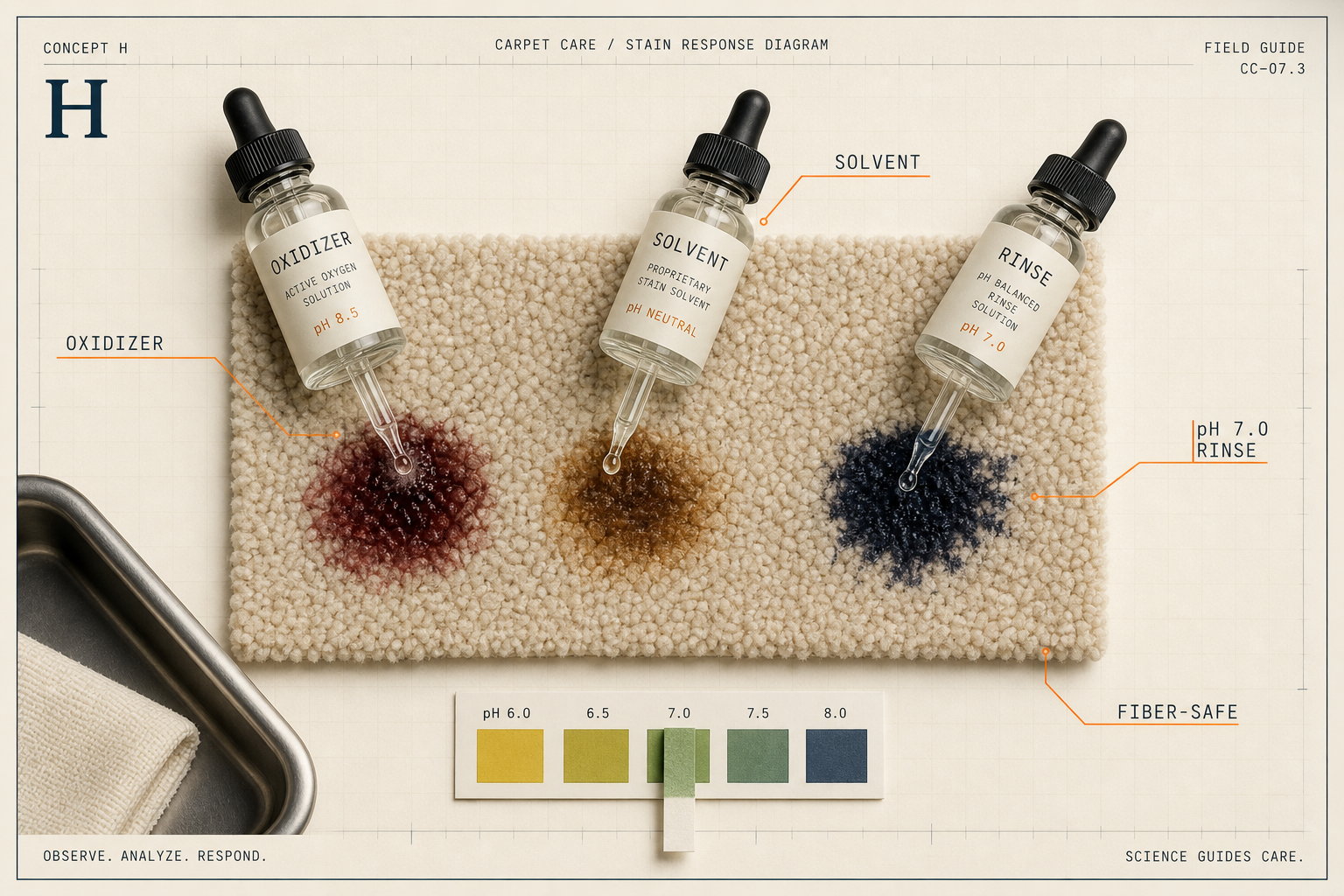
STAINS. IDENTIFIED. REMOVED.
Stain identification first, chemistry second. Wine, coffee, ink, blood, grease, makeup, dye transfer — matched to the right oxidizer, solvent, or reducer, then rinsed to neutral pH.
5 steps. Chemistry first.
- ·Stain class testing
- ·Hidden-spot dye test
- ·Fiber check
- ·Colorfast verification
- ·Solvent compatibility
- ·pH baseline
- ·Matched chemistry
- ·Cool to warm only
- ·Gentle agitation
- ·pH 7.0 neutral
- ·Full residue removal
- ·Multiple passes
- ·Dry-down check
- ·Wicking prevention
- ·Re-treat if needed
- ·Stain class testing
- ·Hidden-spot dye test
- ·Fiber check
- ·Colorfast verification
- ·Solvent compatibility
- ·pH baseline
- ·Matched chemistry
- ·Cool to warm only
- ·Gentle agitation
- ·pH 7.0 neutral
- ·Full residue removal
- ·Multiple passes
- ·Dry-down check
- ·Wicking prevention
- ·Re-treat if needed
Right chemistry for the stain.
Active-oxygen oxidizers break the chromophore. We work cool, agitate gently, then neutralize — no bleach halos.
Tannin-specific solvents lift the brown without yellowing the fiber. Old set-in coffee stains usually come out in 1–2 passes.
Glycol-based solvents dissolve ink resins, then dye-transfer rinse pulls the color off the fibers without bleeding to surrounding pile.
Cold enzyme treatment breaks the protein bond first. No heat (which sets blood permanently), then standard rinse.
Citrus-derived d-limonene solvents dissolve the oil; surfactant rinse pulls it from the fiber. Common around kitchens and vanities.
We test in a hidden spot first, identify the class, then work systematically. If we can't lift it, we tell you before we start — no guesswork.
Questions, answered.
Don't see yours? Call us — we'll talk through it, no pressure.
Call (203) 340-1014